

I didn’t go looking for clarity.
That’s probably the first thing worth admitting.
I am in Sedona.. Red rock, silence between thoughts, that strange feeling that if you stay still long enough, something might reveal itself.
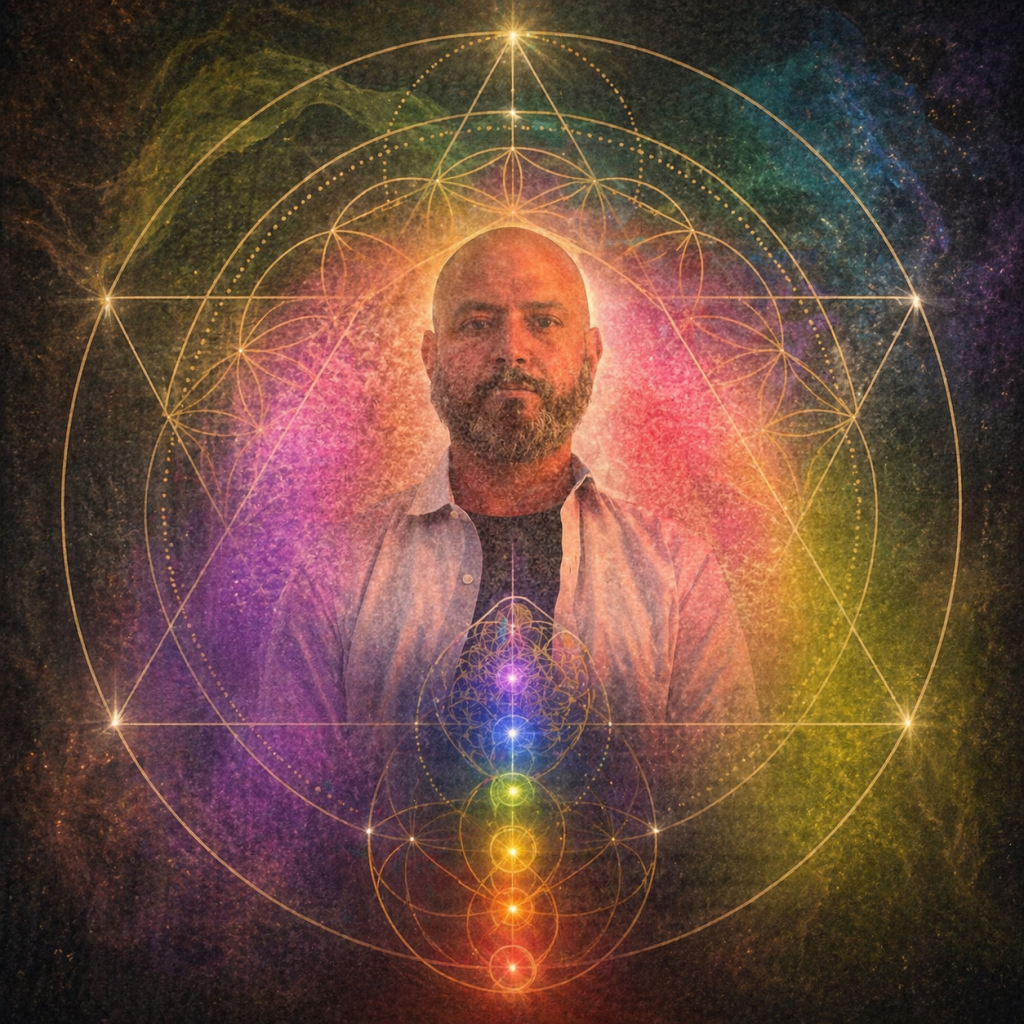
That’s how I ended up in the chair.
“Aura first,” they said.
Of course.
I’ve spent my life in systems—legal, professional, structural—built on logic, evidence, and outcomes.
And yet there I was, letting someone read what I’ve spent years trying to decode on my own.
They didn’t hesitate.
“You’re tired of people’s… stuff.”
Not the word they used—but close enough.
And I laughed, because that part didn’t feel mystical.
But what surprised me wasn’t the observation.
It was the framing.
They said my energy wasn’t weak. It wasn’t broken. It was overcommitted.
Too many things running through it at once. Too many responsibilities assumed as default. Too much of me positioned at the front of problems that didn’t actually require me to be there.
That landed differently.
Because I’ve always measured capacity by how much I can hold.
Not by how much I should.
We talked about uncertainty. Not chaos, not crisis, just that quiet, persistent signal that something needs to be recalibrated. The kind that shows up when the system still works, but the way you move within it starts to feel… misaligned.
Not wrong.
Just inefficient.
“You don’t need to leave,” they said. “You need to reposition.”
That’s the part I didn’t expect.
Because the easy narrative for me is to walk away. Burn it down. Start over.
But that’s not what this is.
We’ve built something that works.
A practice. A structure. A way of operating that delivers results.
Walking away would be dramatic. Staying—intentionally—that’s harder.
That’s where the philosophy starts to matter.
Because systems aren’t static. They’re living things. And the role you play inside them isn’t fixed unless you decide it is.
Somewhere along the way, I stepped into a version of myself that handled everything. Took point. Carried weight. Solved problems before they fully formed.
It worked.
Until it became the only way.
And the reading… whether you call it intuition, reflection, or something else entirely, forced a different question:
Not what do I need to do next?
But who do I need to be within what already exists?
That’s a quieter question. But it’s the one that actually changes things.
There’s another part of this I can’t ignore, and it’s not abstract. When you carry tension long enough, it doesn’t stay contained. It leaks. Into conversations. Into tone. Into the way you show up with the people who don’t deserve the weight of what you’re carrying. I can see it now more clearly than I probably wanted to—that my frustration, my intensity, my need to keep things moving has, at times, come at a cost to people I respect, trust, and care about. Not because the intent was wrong, but because the delivery missed the mark. I see that now and want to be better.
And if this whole exercise is about recalibration, then it has to include that too. Being better isn’t just about working differently, it’s about relating differently.
Listening more. Reacting less. Leading without letting pressure define the interaction. I don’t need to become someone else. But I do need to be more aware of the impact I have, and more intentional about being the kind of friend and business partner people actually want to stand next to, not just rely on.
Before I left, I looked down at my calf.
The alien tattoo.
Simple lines. A little strange.
People ask what it means.
I usually say curiosity.
But that’s not the whole story.
Standing there, it felt like something else.
A reminder that perspective is always optional.
That you can exist inside a system without becoming indistinguishable from it.
That you can belong… and still observe.
Engage… and still question.
Lead… and still retain a sense that there’s more than one way to see what’s in front of you.
The alien doesn’t fit perfectly.
That’s the point.
And maybe that’s the role I’m stepping into now.
Not outside the system.
Not above it.
But slightly… offset.
Enough to see it clearly.
Enough to choose how I move within it, instead of defaulting to how I always have.
The reading didn’t give me answers.
It reframed the questions.
And somewhere in that shift, the uncertainty lost its edge.
Because this isn’t about leaving.
It’s about staying—with intention.
Restructuring how I engage.
Redistributing where I spend energy.
Letting go of the idea that effectiveness requires constant presence at the center of everything.
The system doesn’t need more force.
It needs better positioning.
And so do I.
While everything isn’t perfect, it’s worth refining.
Worth recalibrating.
Worth making work… differently.
Same system.
Same foundation.
Different role.
More deliberate.
More aware.
More… aligned.
And maybe that’s the real return. Not a reset. Not a reinvention.
Just a conscious decision to step back into what we’ve built,
with clearer eyes,
steadier hands,
and just enough distance to remember
I don’t have to be everywhere
to be effective anywhere.


 Core Memories
Leave a comment