

Eddie E. Stephens, Sr. didn’t build a store.
He built a standard.
It was measured the way he measured everything: fit, fabric, service, and the one thing you can’t fake for long—reputation. The business that carried his name wasn’t just about clothing. It was about the quiet confidence a man feels when he knows he’s properly put together. Over time, that standard got stitched into Miami’s everyday rhythm, following the city as it grew—showing up wherever Miami’s men lived, worked, gathered, and traveled.
If you want the clean timeline, it goes something like this:
1890s
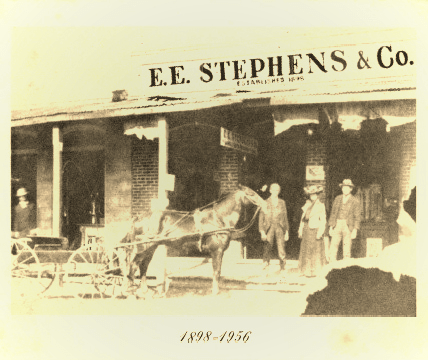
Family roots in the clothing trade. The Stephens story starts early, grounded in Florida commerce and the steady work of outfitting a community. The posture was set right there: do it right, stand behind it, and let your name mean something.
1925
Eddie Stephens arrives in Miami—when Miami is still becoming itself. Fast, ambitious, image-conscious. He understands instinctively that in a city like this, presentation isn’t vanity. It’s opportunity.
1926
The “Eddie Stephens” name becomes established. It’s no longer just a man—it’s a promise. Taste. Workmanship. The feeling that someone serious is paying attention.
1947
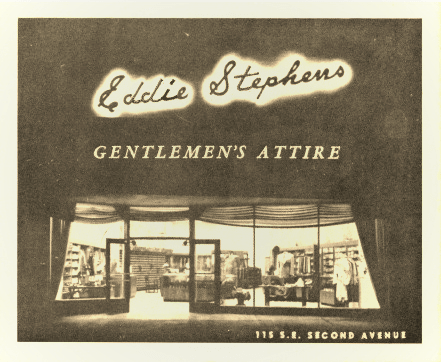
The major downtown storefront era begins. A flagship opens at 115 S.E. 2nd Avenue, and a visible chapter starts—one where customers don’t just come to buy. They come back because they trust.
1950s
The business matures into a Miami institution. In-store events. Community moments. By then, it isn’t simply a place to shop—it’s a place people know.
1960s
Expansion follows Miami’s movement. Neighborhoods shift. Shopping centers rise. The Stephens name appears where Miami lives, no longer tied to a single address.
Late 1960s–1970s
The identity sharpens: custom work, practical value, strong standards. Made-to-measure isn’t for show. It’s for men who want to look right, feel right, and spend wisely. Quality presented as a smart decision.
1970s
The footprint becomes part of the brand:
Downtown Miami (including the well-known 225 S.E. 1st Street address)
Coral Gables (including 356 Andalusia Avenue)
Miami Beach / Surf Club-era presence
Dadeland (promotions tied to that store)
Miami International Airport—placing the brand where travelers and first impressions collide
February 1980
Eddie E. Stephens, Sr. dies—closing the founder’s chapter. What remains is what he built: a name associated with craftsmanship, service, and Miami menswear itself.
But if I’m being honest, my grandfather’s success wasn’t a trick of advertising. It was the slow accumulation of trust.
Men came in needing suits, sport coats, shirts, ties—sure. But what they were really buying was the feeling of being handled with care. The Stephens name stood for an approach: no rushing, no sloppy shortcuts, no “good enough.” The fit mattered. The details mattered. The customer mattered.
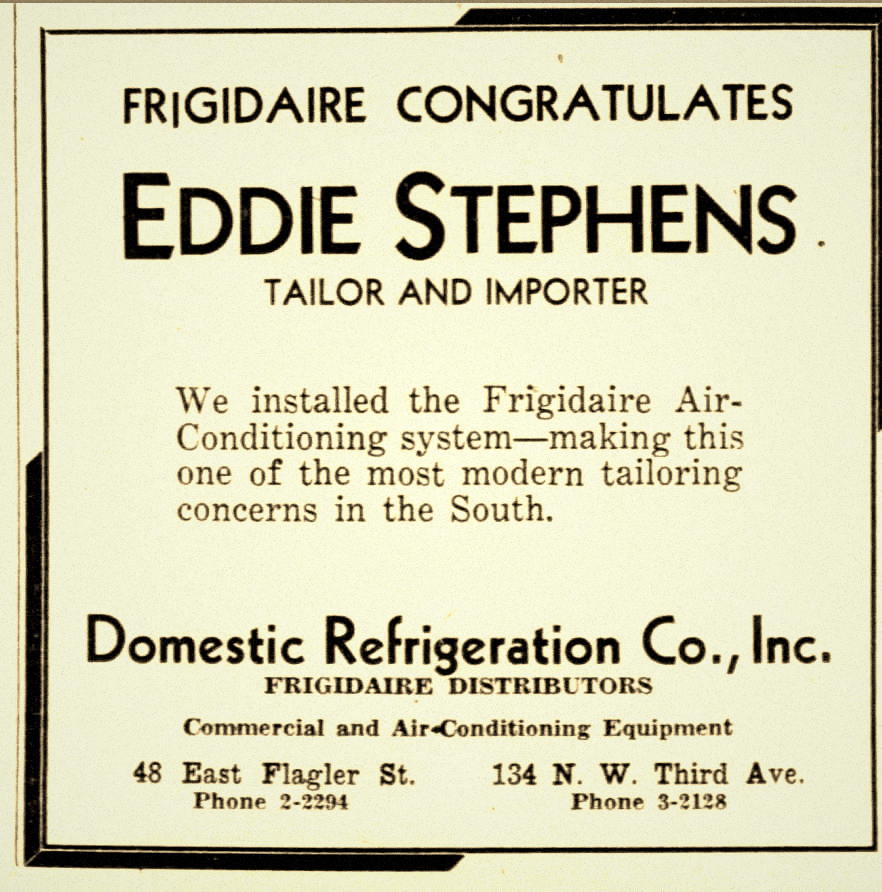
And his identity as a tailor and importer tells you everything about how he thought.
He cared about how something was made. He cared about what it was made from. He believed quality started long before the needle touched the cloth. He wasn’t just selling a suit. He was selling taste, selection, and standards—then turning it into something personal through measurement and fit.
One of the most honest phrases tied to the Stephens story is simple: fine things, good prices.
Not cheap. Not flashy. Just fair value for something made right.
That philosophy is why the business could last through changing decades. A good suit is never just fabric—it’s durability, reliability, and a man’s sense of self. My grandfather priced the work like someone who expected customers to come back—because he expected the product to earn that return.
And the business wasn’t hidden. It was positioned where Miami moved. Because it understood something about human nature:
A man doesn’t buy confidence in the abstract. He buys it in moments.
Before a promotion.
Before a wedding.
Before a meeting.
Before a flight.
Before he has to walk into a room and be taken seriously.
That’s why the airport presence matters to me. Putting the Stephens name in Miami International Airport wasn’t only convenient—it was symbolic. It said: this is where first impressions happen; we belong here.
The legacy also lived in the wider community—society, civic life, business life. The shop wasn’t separate from Miami. It was inside Miami’s rhythm.
And here’s a detail I love: my grandfather didn’t just fit suits—he fit words.

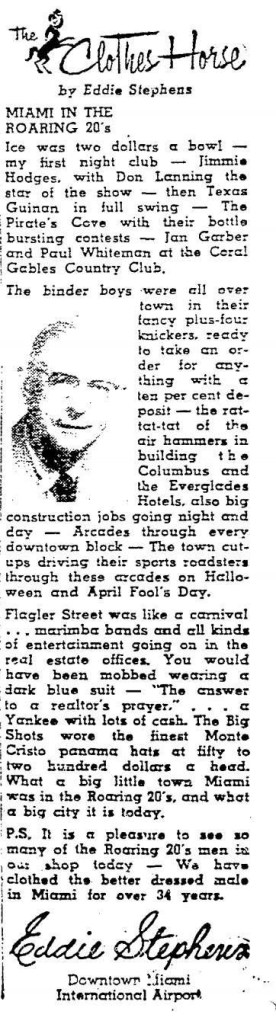

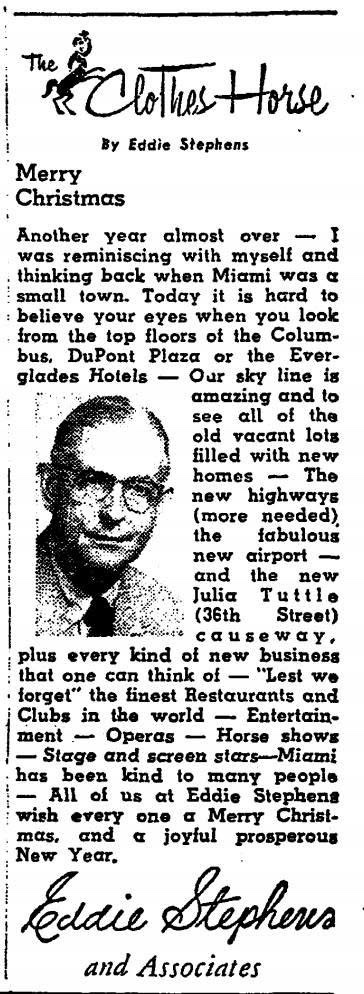
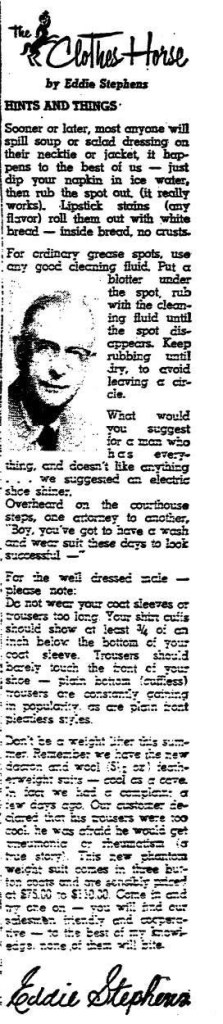
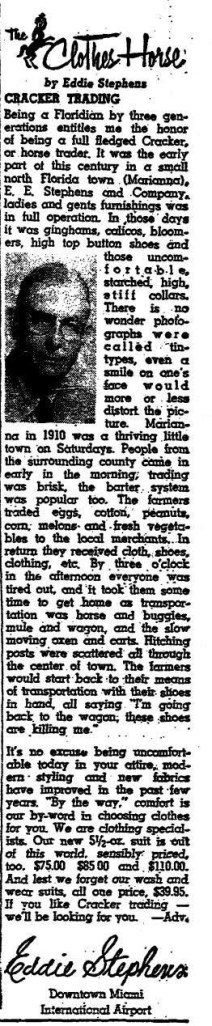
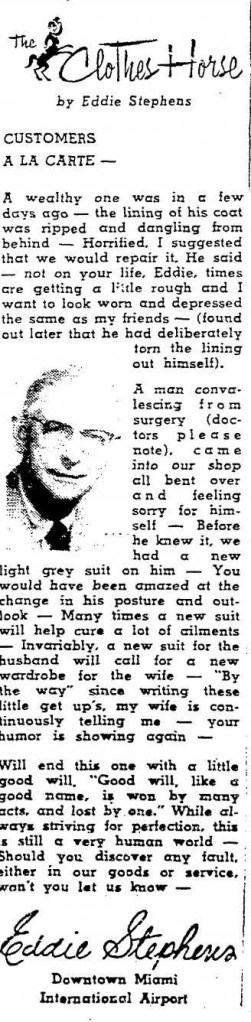
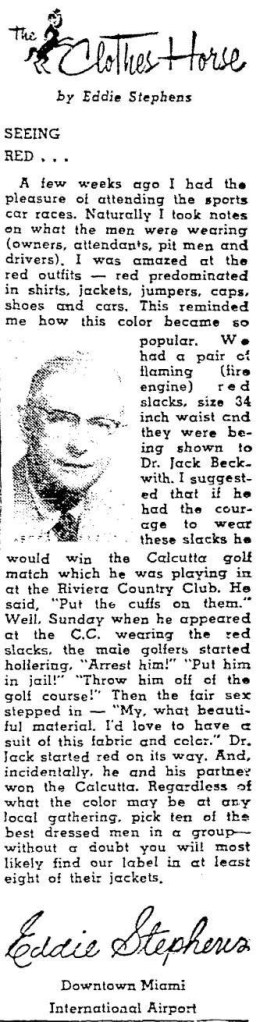
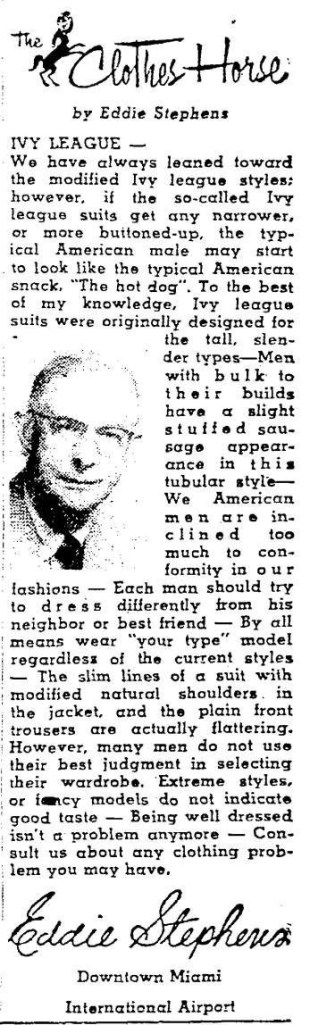
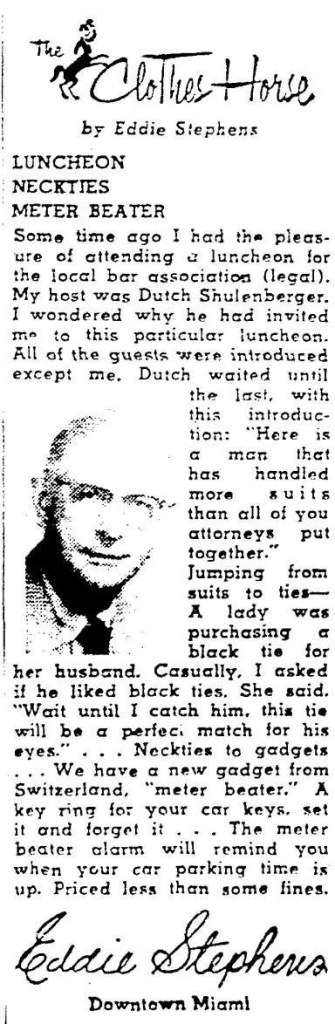
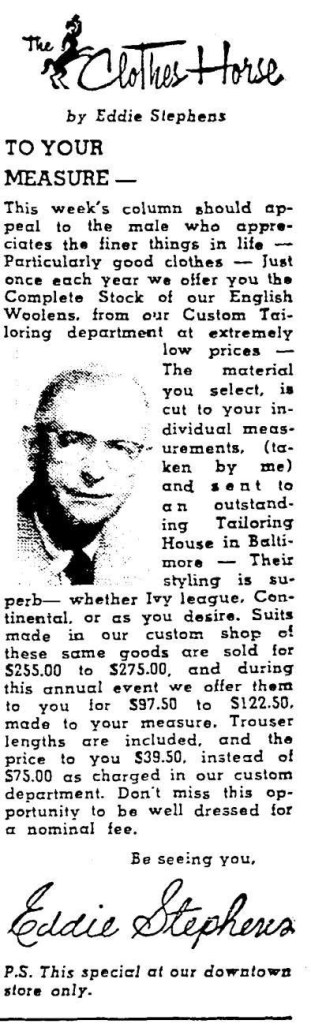
His writing carried the same personality the store did: practical, observant, sometimes funny, always human. He wrote the way a good clothier works—noticing what people don’t say out loud, understanding what they’re trying to project, and translating it into something they can wear.
So when I look at this timeline, I don’t just see addresses.
I see a consistent thread: my grandfather helped dress Miami as it grew up—decade after decade—in the places where men were trying to become something.
And that’s the real inheritance. Not only a name, but the standard behind the name.
A belief that details matter.
A belief that reputation is earned.
A belief that quality, paired with fairness, becomes its own kind of permanence.
That’s what Eddie E. Stephens, Sr. left behind.



 Core Memories
Leave a comment