

I started my life at the University of Miami thinking I could be an artist and announced this with the selection my major; Motion Picture Production.
This was before “video” became a button you press and a file you drag.
This was film—real, physical film—temperamental and delicate. You cut the story into pieces, literally, and then stitched it back together with tape.
It was beautiful.
It was also a dying language, and I didn’t know it yet.
Back then I still believed my path would be made of art. Not law. Not courtrooms. Not suits and affidavits and calendars that eat your life one hearing at a time.
Art.
My first production was an independent project, the kind of thing a young man makes when he doesn’t have money but does have obsession.
I made a music video set to “Fade to Black” by Metallica—a song that is basically grief with distortion pedals. The film content was about a young man who loses his mother and slowly goes insane.
It was fiction.
It was also a self-portrait.
I told myself it was just storytelling, just symbolism, just the drama of youth trying to become meaningful. I told myself I wasn’t going insane.
…Or was I?
So I did what artists do when life becomes unbearable: I turned it into art.
And somehow—it won an award.
Not the Cannes Film Festival. Not the glamorous one. It was the Canes Award, as in the Miami Hurricanes Film Festival. It wasn’t international prestige, but it was validation. It was a little gold star!
Second year: group project.
Shoot a documentary with synced audio on 16mm film.
I pitched my idea to my team; “Let’s do a documentary on the famous tattoo artist Lou Sciberras.” Tattoos aren’t just ink—they’re confession, identity, ritual. They’re stories people choose to wear forever. It felt like the perfect subject for film.
Another team was also doing a tattoo documentary. I didn’t give them much thought. My team accepted my pitch. We had momentum. We had a plan. The rest was background noise.
The semester was structured: pre-production, production, post-production. Clean categories. Clear steps.
During production we shot about twenty hours of footage—twenty hours of moments, interviews, atmosphere, tiny details that only become meaningful later when you edit.
But with film, the truth is fragile.
Film has enemies: heat, mishandling, time.
And sunlight.
The University of Miami film lab had a procedure: you checked in your undeveloped film at the school photo lab. I followed the process. I personally checked it in.
And then the footage never came back.
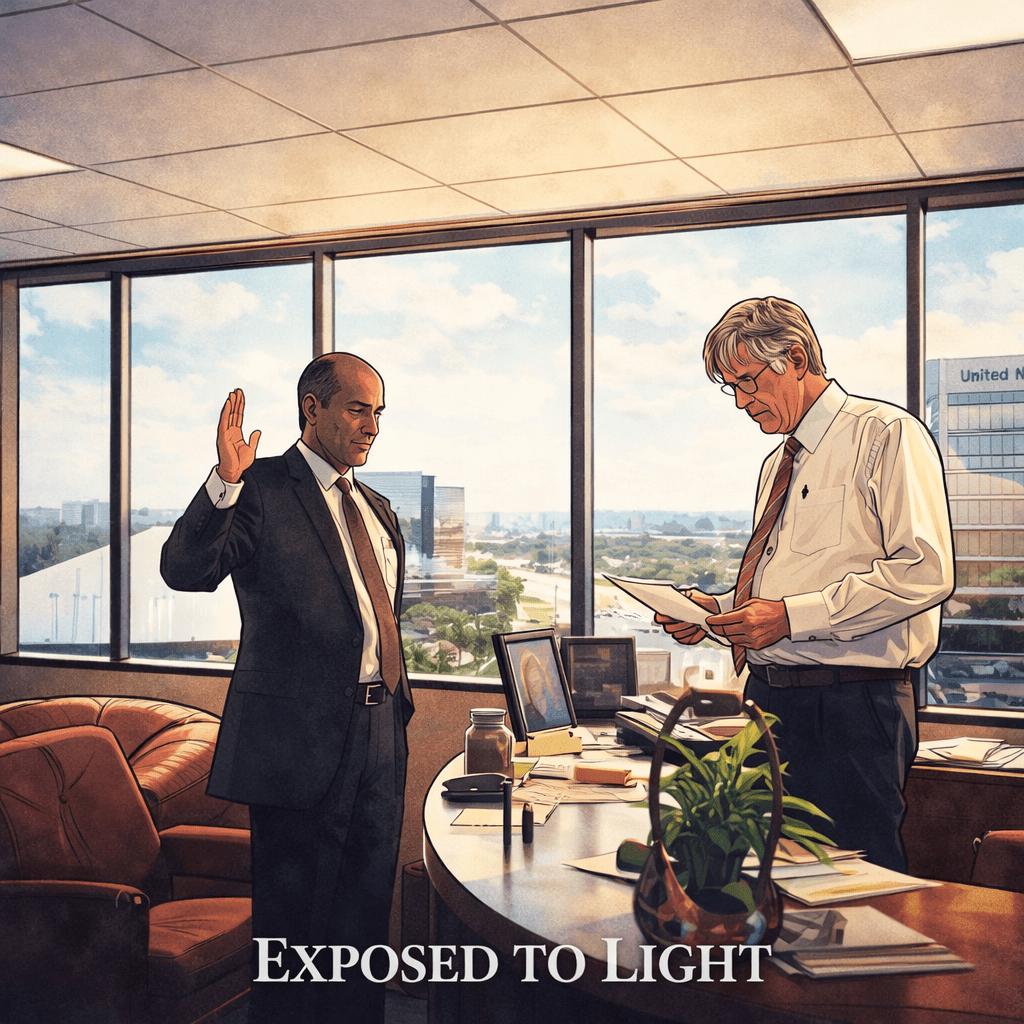
Somehow—after I did my part right—all the film was exposed to sunlight and destroyed.
I can still feel the moment I realized what that meant. Not just academically, not just “we have a setback,” but existentially: we have lost time. We have lost pieces of reality we can’t recreate. We have lost what we already paid for with effort and trust.
Twenty hours.
Gone.
We had to reshoot twenty hours over the next two weeks.
We did it. We had no choice. We dragged people back into positions and moments and spaces and asked them—politely, apologetically—to recreate the past for a grade they weren’t even getting. I turned favors into debt.
I completed the project before the end of the semester.
But it was rough.
And the worst part wasn’t the work. I liked the work. I liked grinding. I liked the hunger and the late nights and the feeling that my hands were shaping something out of nothing.
What I didn’t like was the taste it left in my mouth—this sense that my effort was built on foundations I couldn’t control, and that other people paid the price when my world fell apart.
Part of me thought the team making the other tattoo documentary might have had a hand in the “exposure”.
I didn’t know it then, but something in me shifted. Maybe this isn’t the ocean I’m supposed to swim in.
After the semester, I was off to Aspen with my Uncle John.
Uncle John was my mother’s brother, and he was one of the best divorce attorneys in Palm Beach County and he included me in his family’s winter holiday vacation.
It was a welcomed invitation.
Uncle John told me to meet him at the South County Courthouse in Delray Beach.
The courthouse.
At the time, it was just a building I had never been to before. A place adults went to argue. A place I had no reason to care about.
Little did I know that I would spend a significant part of the next thirty years in those courtrooms trying cases, living inside other people’s endings, learning the language of conflict.
But that day, my uncle wanted me to see him at work.
He picked the easiest possible example: an uncontested final divorce hearing.
This wasn’t war. This was ceremony.
Not a contested hearing—more like a ritual where the judge accepts agreements, checks a few boxes, and meets the mystical jurisdictional requirements to end a bond that used to feel permanent. The legal equivalent of signing a death certificate for a marriage.
My uncle was showing me: this is easy.
But it wasn’t easy.
It just looked easy.
The hard work was invisible—the negotiation, the leverage, the strategy, the timing, the way you move behind the scenes so the public performance lasts three minutes and ends with a polite “Good luck.”
The hearing ended. Paperwork done. A marriage dissolved with the quiet efficiency of a stamp.
Then we walked to the parking lot.
And that’s where the lesson actually happened.
The client—young, pretty, and very pleased with the outcome—handed my uncle $20,000 in cash.
Crisp one hundred dollar bills.
Stacked.
Like a movie.
A favorable settlement indeed.
I stood there watching. This wasn’t just payment. This was gravity.
Then Uncle John took me shopping!
I had only been skiing once—when my mom was alive. Junior high. A different lifetime.
Now I was a second-year college kid headed to Aspen with no proper gear. Blue jeans and a hoodie weren’t going to cut it.
So we went on a spending spree.
Every shop we went into, every item I bought—jacket, gloves, goggles, whatever the mountain required—uncle John gave me a crisp $100 bill from that stack. I’d pay. I’d keep the change.
Item after item.
Store after store.
By the end of the day I had $500 in spare change in my pocket like the universe had turned my life into a training experiment.
I’m not sure reason would have worked—at least not on the version of me that still wanted to be a filmmaker, still wanted to believe the world would meet my art with open arms.
But this?
This worked.
This was primitive conditioning. Not cruel. Not manipulative. Just unmistakably effective.
My uncle wasn’t lecturing me. He wasn’t telling me I was wrong to love art. He wasn’t mocking my dreams.
He was simply showing me a different kind of story.
A story where effort was rewarded in a way that wasn’t fragile.
A story where you didn’t lose your work because someone mishandled a reel of film.
A story where you could build leverage, create outcomes, and be paid for the invisible part—the thinking.
He made it look natural. He made it look possible.
And somewhere between the courthouse ritual and the cash and the crisp bills and the mountain gear, a question began to take shape:
Do I really want to bust my ass in an industry I have no idea is on the verge of becoming obsolete…
or could there be another path?
Was my film sabotaged? Probably. In reviewing the film logs, the other team checked in their film right after mine. Ours was the only film that was destroyed. If you have sunlight exposure, it usually doesn’t destroy every single frame. What were the odds?
Whether it was a sabotage incident or just the universe being quirky, it forced the reshoot, the bad taste, felt like betrayal.
But looking back, it also feels like a push.
A shove, really.
The irony is almost comical: I escaped the shark-infested waters of film school only to swim straight into different shark-infested waters.
Courtrooms.
Divorce.
Human conflict.
But the sharks in law don’t eat your film. They eat your time. Your attention. Your peace. And if you’re not careful, they eat your soul.
Still, I changed course.
After the trip, I changed my major from Motion Picture Production to Computer Information Systems.
And I made plans to take the LSAT.
Here’s the part that matters—what you asked me to say, the meaning beneath the events.
My Uncle John didn’t just direct my path with money or influence or convenience.
He directed it with presence.
After my mom died, the world became less reliable.
You start making choices based on survival, not vision. You start looking for certainty anywhere you can find it.
My uncle didn’t offer certainty with words.
He offered it with a demonstration.
And maybe, deeper than that, he did something even more personal:
He gave me permission to pivot.
Because when you lose a parent young, you often cling to the first identity you build afterward. It becomes sacred. Not because it’s correct, but because it’s yours. It’s what you built in the crater.
I was clinging to “artist” like it was a life raft.
My uncle didn’t take that from me.
He simply showed me that I could carry the artist with me into a different world.
That the artist wasn’t my major.
The artist was my wiring.
The artist was the way I see patterns, the way I tell stories, the way I obsess…
And in that sense, maybe I never stopped being an artist.
Maybe I just changed mediums.
Film splicer to legal strategist.
Music video editor to trial storyteller.
Documentary director to cross-examiner.
After all…. The two are pretty similar. As a trial attorney I get to produce a major production, and I play a lead role in it.
I didn’t abandon art.
I relocated it.
And Uncle John—standing in the south county courthouse, quiet and confident, was the first person who showed me that a path can change without your soul being lost in the transfer.
So yes—I am an artist, not a lawyer.
But that day in Delray Beach, I learned something I couldn’t unlearn: there are different ways to cut and splice reality, and some of them pay you back with stability.
I didn’t stop being an artist. I just traded film for systems, and later, systems for stories told under oath—where the light is harsh, the stakes are high, and the edits happen in real time.
And somewhere in the middle of all that, I realized Uncle John wasn’t recruiting me into law.
He was rescuing me from the feeling that my life could be ruined by one careless exposure to sunlight.

 Core Memories
Leave a comment