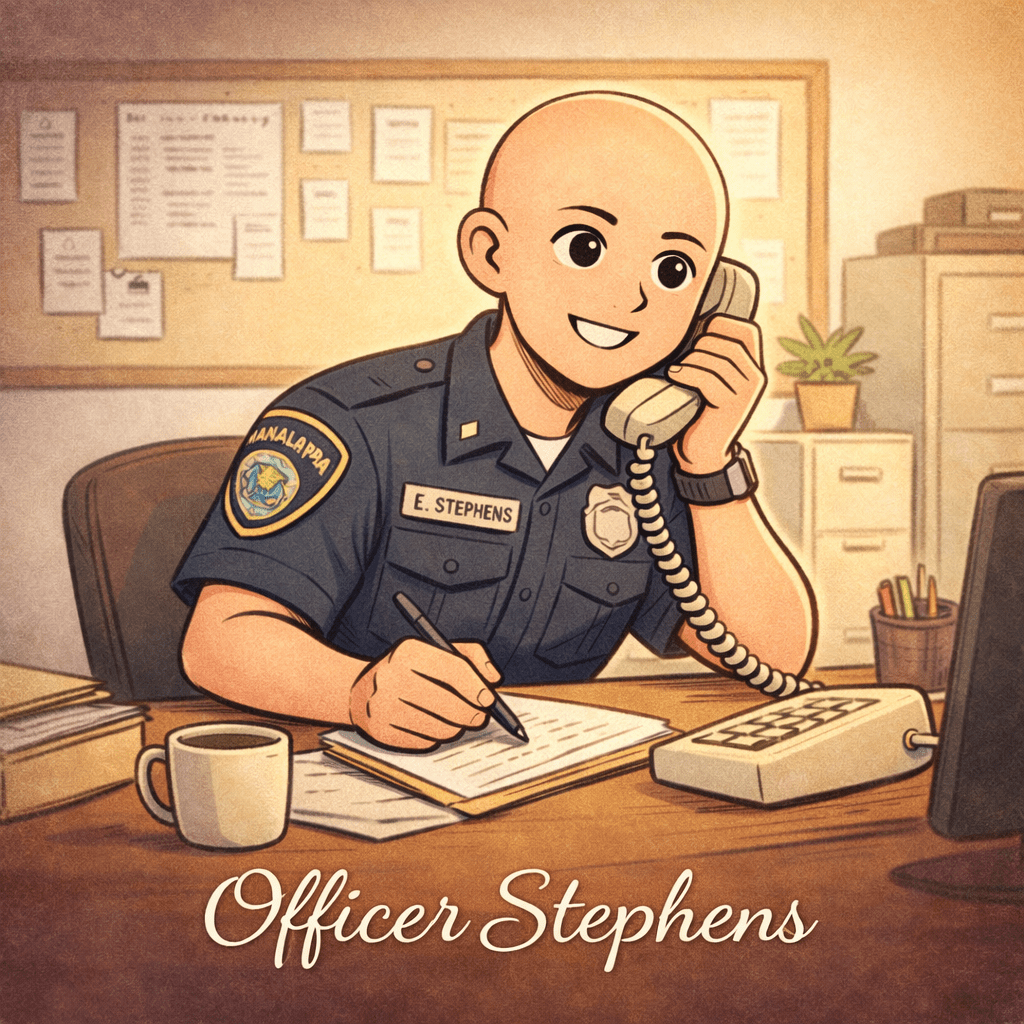


My name is Eddie Stephens, and I’m a divorce attorney.
Which… is a sentence that usually earns one of two reactions: either a polite nod that says, “Oh wow, that must be… a lot,” or a look that says, “So you’re the guy who profits off heartbreak.”
And honestly? Both reactions make sense.
Divorce attorneys are known for dealing with high conflict. Super stressful. The kind of work where you spend your days in the blast radius of other people’s worst moments—rage, fear, betrayal, grief—sometimes all in the same fifteen-minute hearing.
A lot of my peers are totally burnt out. And if you’re a family law professional, you have to be careful, because of the amount of toxicity you’re exposed to. It’s almost like working with poison. If you don’t respect it—if you don’t protect yourself—it gets in you.
So I’ve had to take active steps to ensure my own mental wellness.
And you might be asking: Why would anyone want to do this?
Here’s the part that always surprises people.
Not only am I a divorce attorney… I love being a divorce attorney.
Because I get to be the help my family needed when we were in crisis.
See, when I grew up in Miami, I had an older sister and two parents who loved me—very much.
But both of my parents had substance abuse issues.
And that led to a very chaotic childhood.
In the 1980s, we didn’t have language for what was happening inside kids like me. We didn’t talk about Adverse Childhood Experiences. We didn’t understand the science that toxic stress disrupts the development of a young child’s neurological brain.
But now we do.
And when I look back, I can see it so clearly: that constant sense of waiting for the other shoe to drop. That hyper-awareness. That feeling that the world could flip upside down in an instant, so you better be ready.
When I entered high school, my mother died because of her addiction.
That was devastating.
I know there are people who can say the word “devastating” and it lands softly. For me, it doesn’t. It lands like a door slamming. Like the moment you realize you’re not going back to the life you thought you had.
After she died, there were a lot of mental health professionals in my life who would later say, “Eddie, you’re very lucky to be living a functional, productive life.”
I’m lucky?
I didn’t feel lucky at the time.
I had to move in with my grandmother. She paid for things. She gave me shelter. But she had already raised her kids. And I was kind of… an unexpected sequel.
So I was left to my own devices to figure out high school. Figure out getting into college. Figure out how to become a person.
And in fact, it felt like I was all alone.
But here’s where the story shifts.
Because that’s when the angels showed up.
And I don’t mean angels with wings and glowing halos. I mean the kind of angels that show up in human form—ordinary people who step into your life at the exact moment you’re about to break, and they do something small that ends up being enormous.
Angels would appear to assist me when obstacles would present themselves—at critical moments in my life. They helped me overcome them.
These angels would manifest in ways like…
My buddy, who taught me how to cook a grilled cheese. And take care of my car. And wash my clothes. Basic life stuff that nobody had taught me—because the adults in my life were busy surviving their own storms.
Or my friend’s mom, who taught me how to see things from someone else’s perspective. The importance of gratitude. I learned a lot of empathy from her. Not from a textbook—just from being around someone who carried warmth like it was a choice she made every day.
Then there was my tenth-grade gym coach.
He asked me how I was doing on days where it was pretty obvious I wasn’t doing very well. And that may not sound like a big deal, but if you’ve ever been a kid trying to keep it together… you know that being seen is everything. His question was a physical sign that I wasn’t alone.
And then there was my drama teacher—Mrs. Julie.
She believed in me during times when I didn’t even believe in myself. She took an awkward, shy kid and made him shine.
When I was sixteen, I wrote a play. It was about a kid who lost his mother.
Because of course it was.
And she didn’t just pat me on the head and say, “Nice job, Eddie.” She let me direct that play. She trusted me with it. And that play toured all over Miami.
It had such a profound impact on my confidence. It showed me that I could create something that not only helped me heal myself…
…but helped me heal others as well.
That was my first real understanding of what storytelling can do. That it isn’t just entertainment. It’s medicine. It’s a way to take pain that would otherwise rot inside you, and turn it into meaning. Into connection. Into something that says to another human being: I see you. You’re not crazy. You’re not alone.
So in college, I wanted to be a storyteller. I started studying motion picture production.
But I also craved stability.
And I wanted a family.
And I saw my uncle—who was a very well-known divorce attorney in Palm Beach. And I watched him—not just in court, but in life. I saw how good he was with his family. I saw a man who could do hard work in hard spaces, and still come home and be present. Still be kind. Still be steady.
And then I had a lightbulb moment.
I watched how he helped people—not just with statutes and strategy, but with presence. With steadiness. With that calm, practiced “I’ve been here before” energy that lets other people borrow your nervous system when theirs is on fire.
And I remember thinking: Okay. This is it.
Get a ticket to practice law. Go work for my uncle. Another angel dropped right into my pathway.
So I did.
And once I made up my mind, getting from Point A to Point B was pretty easy. I’m built that way. Decide. Commit. Execute. When the target is clear, I’m a straight-line guy.
And somewhere along the way, I found something out about myself:
And the reason wasn’t flattering, but it was true: I could deal with other people’s trauma because of what I’d been through. I didn’t get rattled by emotional volatility. I didn’t panic when someone’s story got messy. I knew what chaos smelled like. I knew what grief did to a room. I knew how fear disguises itself as anger.
I could do divorce.
Not just “I can handle it,” but “I’m actually pretty good at it.”
Being a divorce attorney is kind of like being a fireman.
At times, you’re pulling people out of very dangerous situations—not flames and smoke, but financial ruin, emotional collapse, the kind of conflict that can swallow a family whole if no one steps in and says, Stop. Breathe. Let’s get you out.
I’ve been doing it for 30 years.
And then something happened early in my career that rewired how I saw my job.
I discovered I could help people… without just being a divorce attorney.
There was a paralegal who worked with and she was having a hard time raising her teenage daughter, Kathleen. And one day, her sixteen-year-old went to Manalapan Beach to drink with some older boys.
That’s the kind of full-circle that makes you stop and just exhale for a second.
Now, if you’re from the Treasure Coast, you know the inevitable result of underage drinking on Manalapan Beach.
If you’re not from around here, let me translate: Manalapan is where the uber-rich live. They’re so rich they have their own police force. It’s basically a zip code with a badge.
So yes—these kids were dumb. And they got nabbed.
Kathleen thought she got off with a warning. But her Mom was beside herself. She didn’t know what to do. She was scared, furious, and exhausted—because parenting a teenager can feel like negotiating with a hurricane.
And here’s the thing: I didn’t know much about raising teenage daughters.
But I did know about the law and telling a story.
And I had an idea.
I was going to leave a message on their family answering machine.
You remember those, right?
If you don’t, it’s like a virtual voicemail for the whole family. The prehistoric ancestor of texting. A shared inbox with no privacy and maximum drama.
So I picked up the phone and dialed the number.
And when the machine picked up, I went full Oscar-worthy performance:
“Hello. This is Officer Stephens from the Manalapan Police Department. I’m calling regarding the incident last night. We’re going to need to speak to Kathleen. Would you please bring her down to the station.”
Click.
That’s all it took.
Kathleen came home from school, played the message, and instantly called her mother in a frenzied panic. Full systems alarm. The kind of panic that makes you regret every decision you’ve made since birth.
And in that moment, her Mom and I realized something: we could leverage this fear and turn it into a teaching lesson.
Now—Kathleen’s mom was kind. She didn’t want to torture her kid. She didn’t want to cause permanent damage. So after the lesson landed, she told her daughter the truth: Officer Stephens wasn’t real.
But the point was: her daughter learned the lesson.
And I learned something too.
I learned I had a superpower.
I could take my unique abilities—however mischievous they were—and actually help people.
And I’ve been doing that ever since. One person at a time.
Because when I was a kid, I used to look for angels.
I used to scan the world for the person who might show up at the critical moment and help me take the next step.
Now?
Now I look for opportunities to be the angel.
I put myself “in traffic”—in the flow of real people, real problems, real moments—where those opportunities arise. And when they do, I serve.
That’s why I’m on the board of directors of a charitable organization called the Center for Child Counseling—because they give therapy to the most vulnerable children in our county, and they’re helping build a trauma-informed community.
And that’s why I serve with Leadership Palm Beach County too—an unbelievable organization—because leadership, to me, isn’t a title. It’s a posture. It’s choosing to be present where the needs are.
And that’s the part people don’t always see.
They hear “divorce attorney” and they picture litigation, money, conflict—paper cuts and power plays. But for me, the story keeps widening, because the whole point was never just the job. The point was what the job trained in me… and what it opened up in me.
Because once you realize you can be useful in the middle of other people’s chaos, you start seeing the world differently. You start seeing “help” as a muscle. And if you keep using it, it gets stronger.
That’s why I’ve poured myself into the community.
I help oversee Leadership GROW—a program for the fifty highest-achieving 11th graders in our county. Kids who are bright and motivated and standing right at that fork in the road where the next few decisions start shaping the rest of their lives.
And I’ve been a Boy Scout adult leader for fifteen years—literally helping hundreds of young men and women on their journey.
People ask me what I’m proudest of, and I could list the professional accomplishments. I could talk about cases, certifications, wins.
But if I’m being honest?
My proudest achievement is breaking that intergenerational cycle.
Because I know what it’s like when the adults in your world are doing their best, but their best is broken. I know what it’s like to grow up loved and still be unsafe. I know what it’s like to be a kid who has to become a grown-up too soon.
And somewhere along the way, I made a decision—maybe consciously, maybe instinctively—that the pain wasn’t going to keep traveling through me into the next generation. It was going to stop here.
I have two boys—both in their twenties now. Both successful. And I could not be prouder of them.
Not because they’re “successful” on paper… but because they’re good humans. Because they have the kind of foundation I craved when I was their age.
And remember Kathleen? The paralegal’s daughter who survived that ordeal on Manalapan Beach with “Officer Stephens.”
Here’s the twist ending life loves to pull:
That girl—the one who got in trouble—she’s doing pretty good.
I should know.
I married her mother.
And now I’m the grandfather to her eleven-year-old child!
Because it means that one goofy, mischievous moment—one fake voicemail—wasn’t just a prank. It was a tiny spark in a much bigger chain of events. A reminder that help doesn’t always look like a lecture. Sometimes it looks like creativity. Sometimes it looks like timing. Sometimes it looks like stepping in with just enough gravity to interrupt the trajectory.
And that’s why I love being the angel.
The helper.
Helping others is a way for me to honor the angels in my life—and to keep this positive wave of energy moving forward.
Sometimes that help shows up in my role as a divorce attorney—pulling someone out of the burning building when their family is falling apart.
Sometimes it shows up as a volunteer in our community—standing next to a kid who needs a model, or a parent who needs support, or an organization doing the quiet work of healing trauma before it becomes a life sentence.
But only once…
…it showed up by pretending to be a police officer.
And look—maybe that’s not in the “recommended parenting handbook.”
But it worked.
And what it really taught me—what I’ve been learning my whole life—is this:
When I was a kid, I used to look for angels.
Now I look for opportunities to be the angel.
Because sometimes the best way to repay the people who saved you is to become the kind of person who saves others.
One moment at a time. One person at a time.
And if you keep doing that long enough… the story doesn’t just change.
The lineage changes.

 Core Memories
Leave a comment