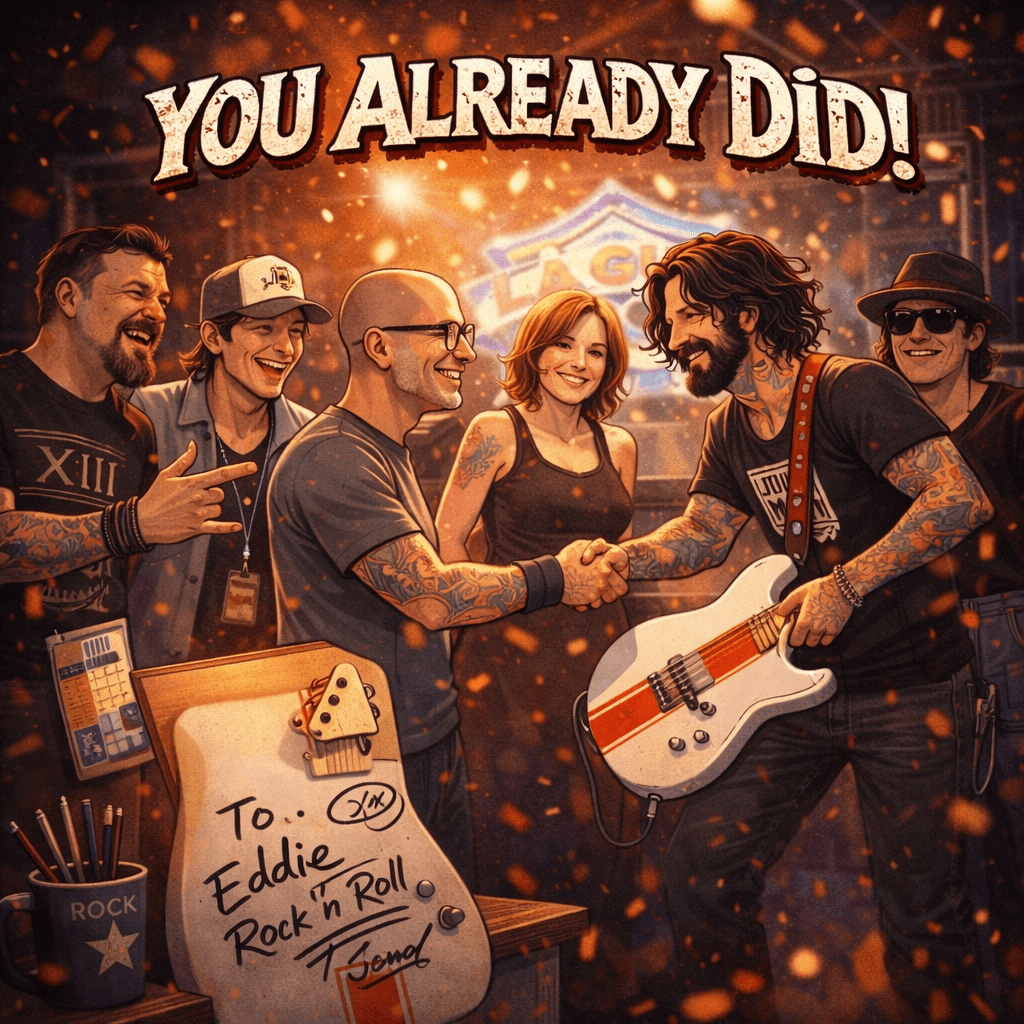


The first time I met Tracii Guns, I wasn’t walking up like a fan with a Sharpie and a plan.
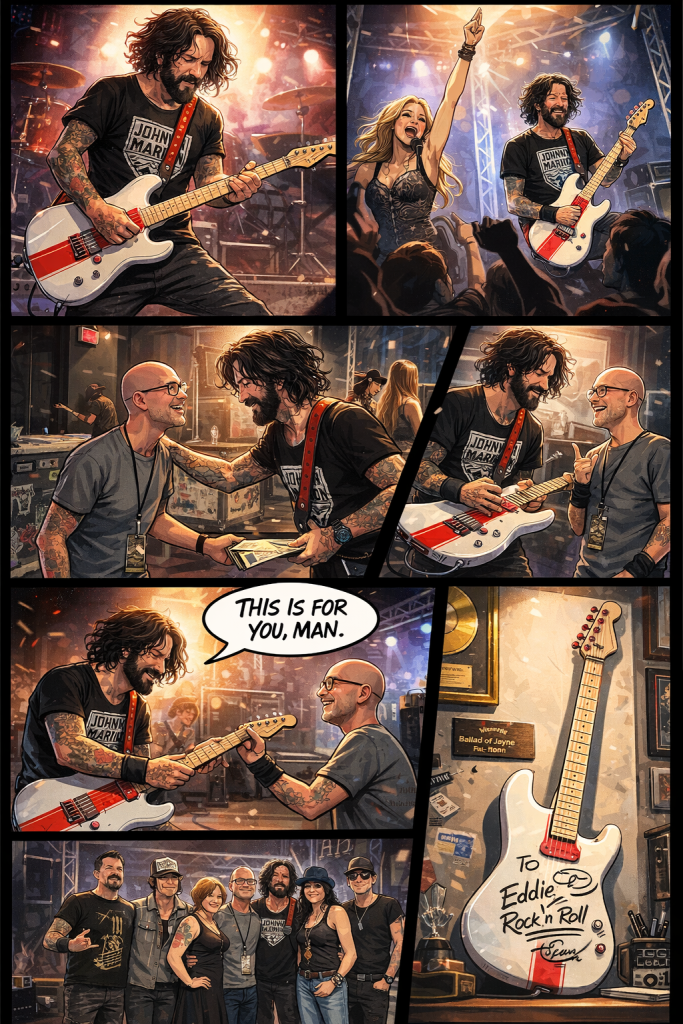
It was one of those nights where the venue lights make everything look a little unreal—black curtains, cables snaking across the floor, road cases stacked like little steel monuments. LA Guns had just done what LA Guns does: they turned the room into a pressure system. Not just loud—alive. And when it ended, the crowd felt like it was still buzzing.
Somewhere in the shuffle—people calling names, hands out, photos, that post-show chaos—I found myself face-to-face with him. Tracii Guns. The guy whose guitar had been woven into the soundtrack of my adolescence.
And suddenly I realized I didn’t want to talk about gear. I didn’t want to say “you guys killed it” and vanish into the crowd.
Because for me, there was always one song that didn’t just “hit.” It helped.
“Tracii,” I said, and my voice did that thing it does when you’re trying to keep it steady. “I don’t even know how to say this right.”
He looked at me—not that half-smile, keep-it-moving look musicians can get when the line is long. He looked at me like he had time.
So I told him.
I told him about my mom, Jan. About losing her. And I told him about “The Ballad of Jayne.”
How it showed up at the exact right time. How it wasn’t just a song I liked; it was a song that gave shape to something I couldn’t shape myself.
I tried to explain how much that song helped me process my mom’s death. How it carried me through hard times I didn’t have language for yet.
“I don’t know how to thank you,” I said. “I don’t even know what gratitude is supposed to look like for something like that.”
Tracii didn’t do a big speech. He just held my eyes and said;
“Eddie… you already did.”
That was it.
But it landed like a gavel and a blessing at the same time.
You think you’re going to meet your heroes and you’ll be impressed by their talent. Sometimes you are. Sometimes you walk away impressed by something else entirely—by how human they are, how present they can be when they don’t have to be.
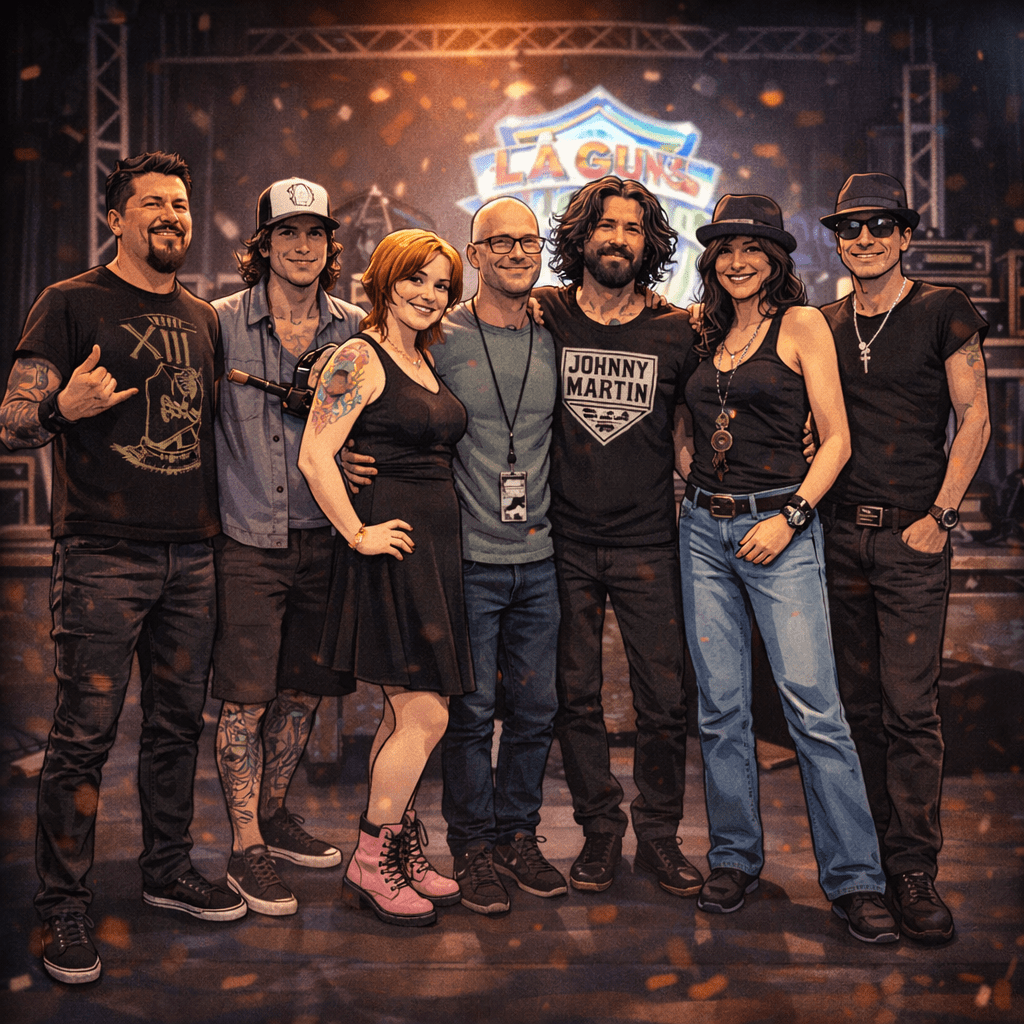
A year later, I saw them again—Dania Beach Casino. Different night, different room, same electricity.
My wife was with me, and she was wearing something that—of course—people noticed. She has this incredible tattoo: a colorful fairy piece by Chris Blinston. It’s one of those tattoos that doesn’t sit quietly. It announces itself. Bright, bold, artful—like it belongs in a gallery and somehow also belongs in a rock show.
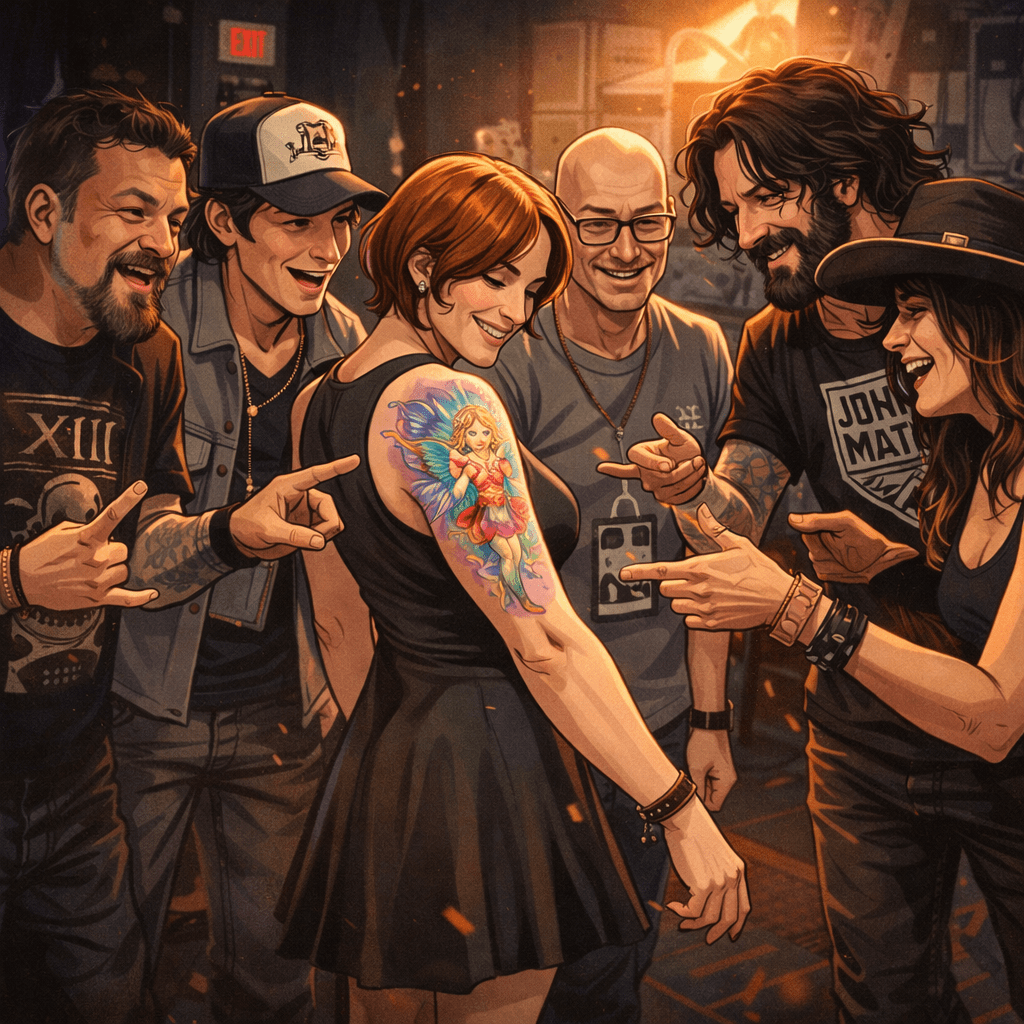
The band clocked it almost immediately.
It started as a quick glance, then a double-take, then the kind of “wait—come here” energy that you only get when artists see other art in the wild. Somebody leaned in, somebody pointed, and suddenly there was this little orbit forming around her arm like the tattoo had its own gravity.
And then—like the universe decided to be funny—Tracii looked up, saw me, and it clicked.
Not in a vague way. Not in a “hey man, good to see you” way.
In a recognition way.
“Eddie,” he said, like we’d talked yesterday instead of a year ago.
They played a great set. The kind of set that reminds you why live music matters. Tight, loud, swaggering—songs delivered like they still mean something to the band playing them, not just to the people who came to hear them.
And when “The Ballad of Jayne” started, I felt it in my chest the way I always do. Not sad exactly—more like reverent. Like standing in a place where something true happened, and you can’t help but respect it.
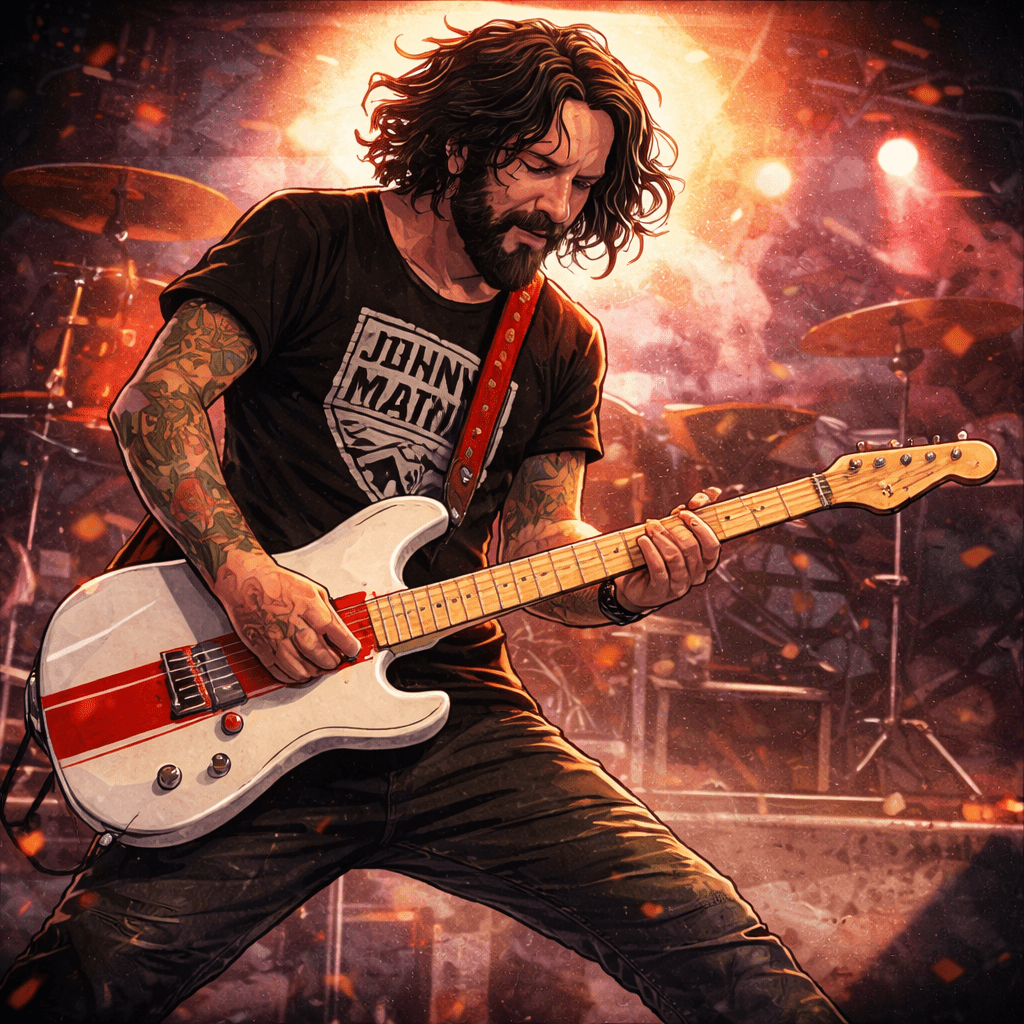
After the show, I figured that was the night: a killer set, a wild moment of recognition, and a story I’d keep replaying on the drive home.
But then Tracii waved me over.
Backstage.
The area behind the curtain always feels like you’ve stepped through a portal: the noise drops, the world shrinks, and suddenly you’re standing among cases and cords and the quiet machinery that makes the magic happen.
He reached for something and my brain tried to interpret it in real time.
A guitar.
Not a guitar—the guitar.
White, with a bold red stripe. A Mario’s Fu-tone that looked like it belonged on a stage and also like it could start a fight if you swung it hard enough.
“This is the one I played it on tonight,” he said—meaning “Jayne.” Meaning that song.
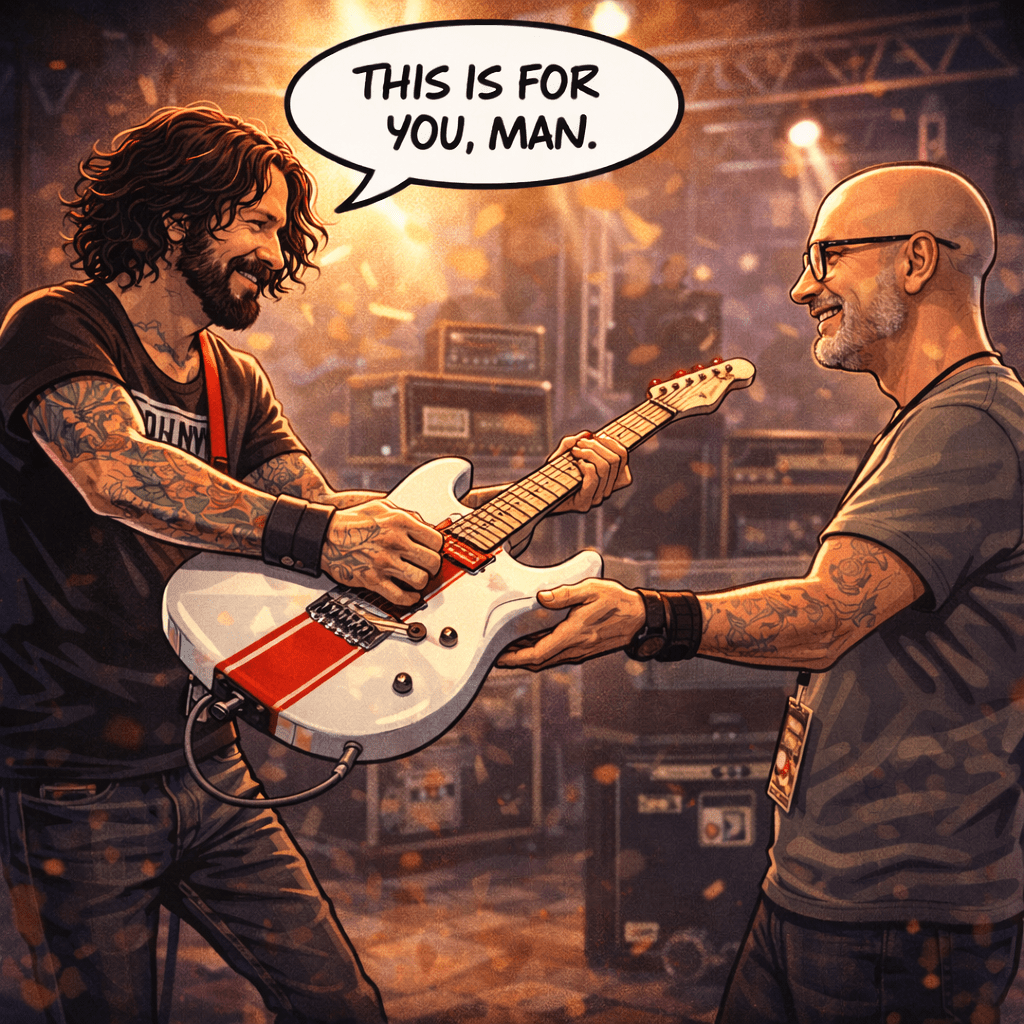
He presented it to me, simple and direct, like it was the most natural thing in the world.
And I remember thinking: This can’t be real.
I managed some version of “Are you serious?” which is what every human says when they’re short-circuiting.
He was serious.
And suddenly I wasn’t just holding a guitar.
I was holding a symbol. A weird, beautiful artifact where music and memory and kindness collided. A bridge between a song that helped me survive and the person who helped create it.
That night didn’t feel like “I met a band.”
It felt like the universe leaned in close and said, I see you. I see what you carried. Here’s something to mark it.
Now the guitar hangs in my office at work.
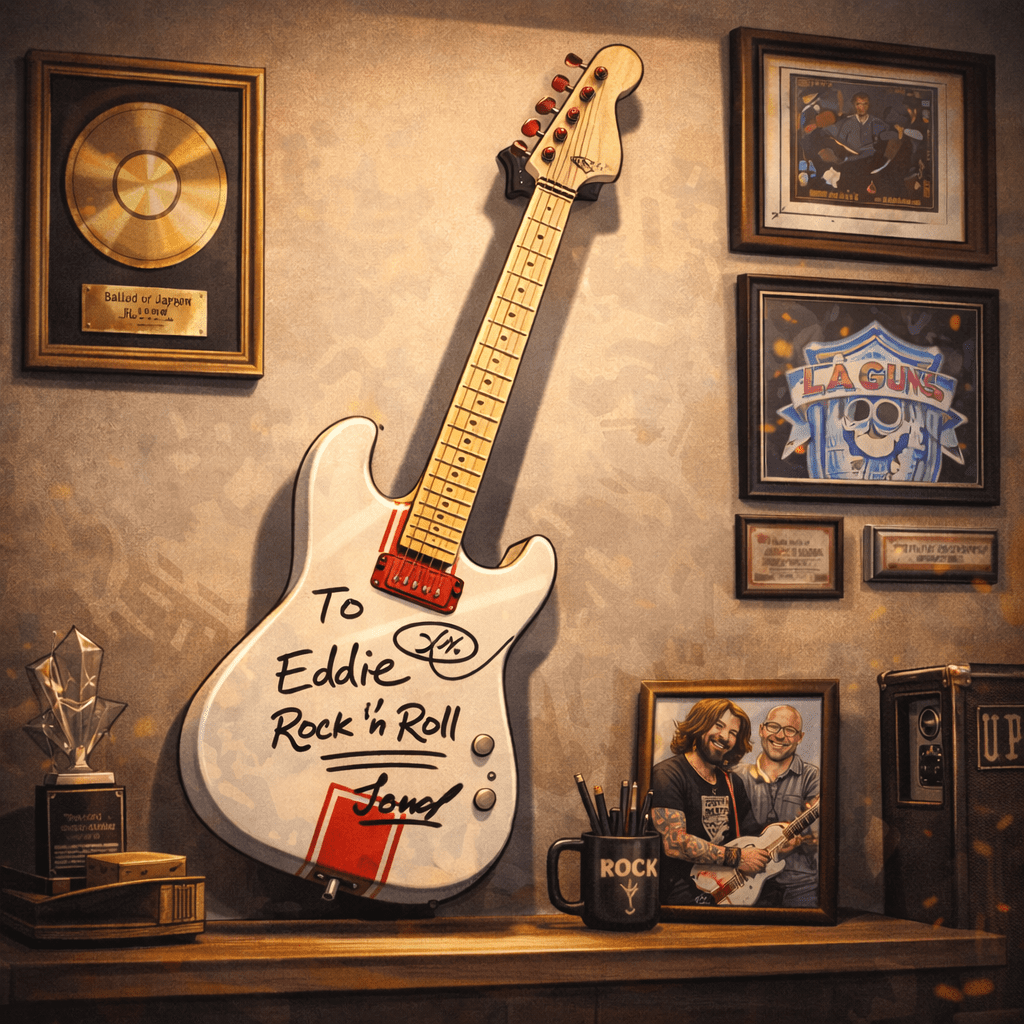
People see it and they think it’s rock-and-roll décor. A cool story.
And yeah—it’s cool. It’s very cool.
But for me, it’s also a memorial without being heavy. A reminder without being painful. A piece of proof that sometimes the world gives you a moment of grace right when you think you’ve already spent your allotment.
Every time I look at that white-and-red Fu-tone, I hear the song. I hear the crowd. I hear the quiet certainty in his voice:
“Eddie… you already did.”
And I think about my Mom.
And I think about how sometimes the thing that saves you isn’t a grand solution.
Sometimes it’s a song.
Sometimes it’s a sentence.
Sometimes it’s a guitar handed to you backstage—like a benediction—so you can hang it up and remember that you made it through.

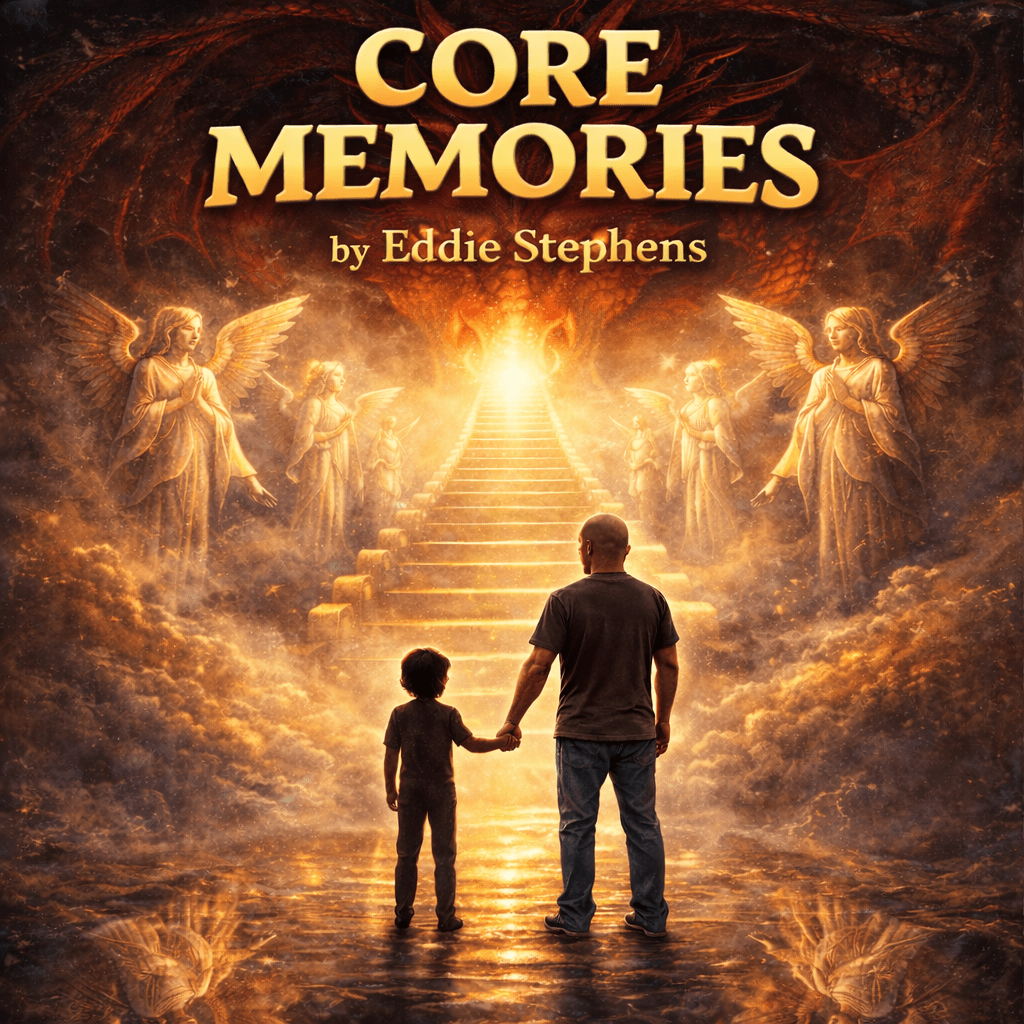
 Core Memories
Leave a comment